
A Roadmap to Community Radios' Sustainability

Community Radio Sustainability Blueprint
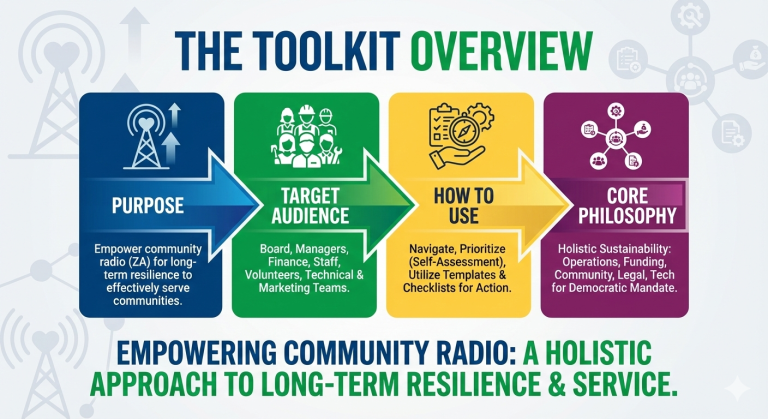
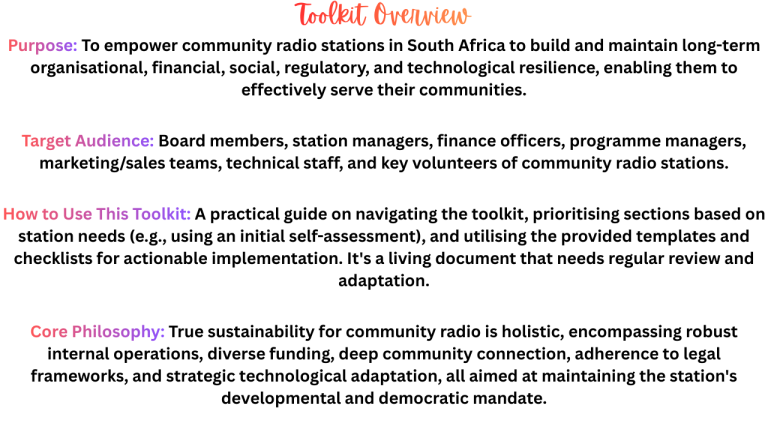
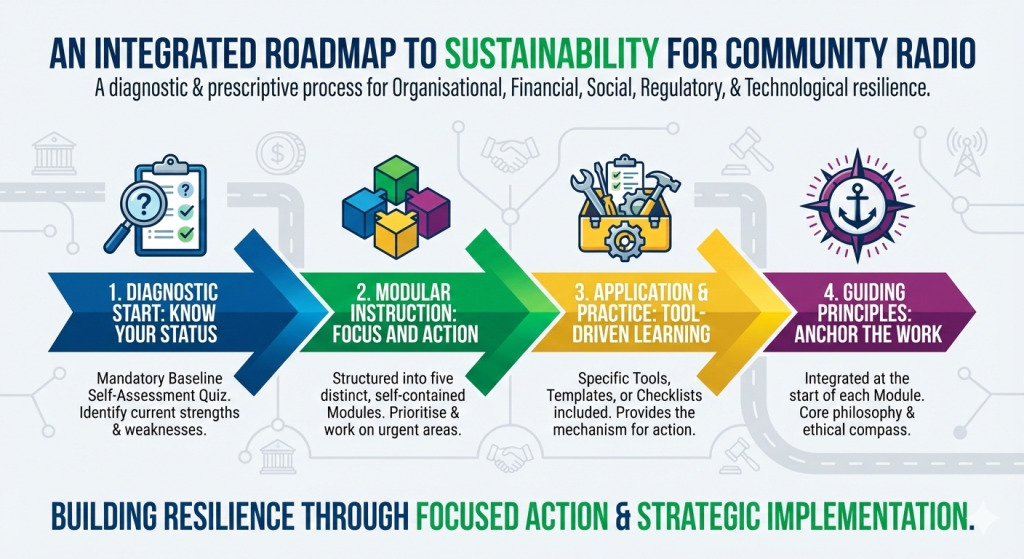
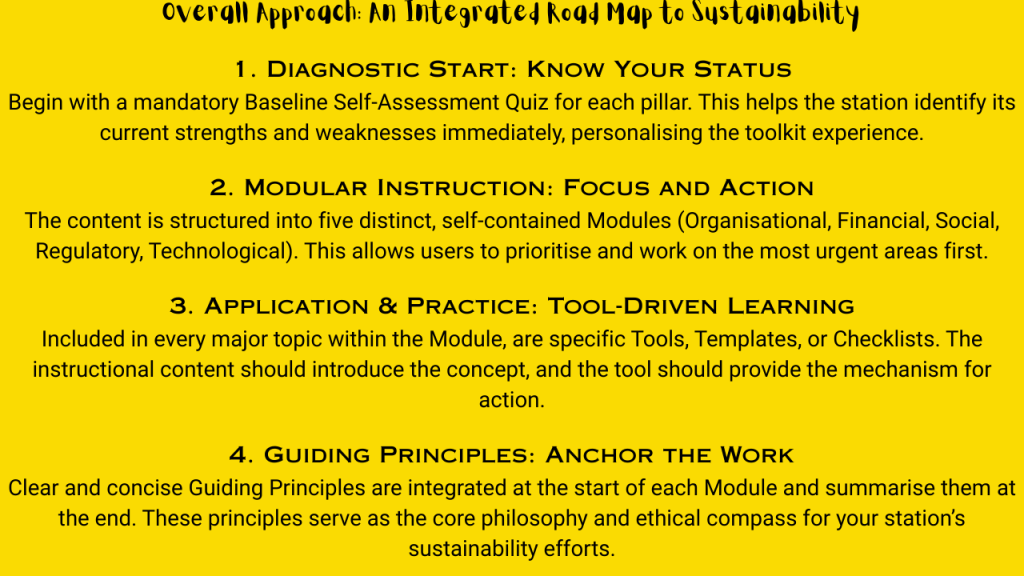
A holistic framework for South African community radio stations. True sustainability extends beyond just financial survival—it requires a delicate balance of governance, community connection, regulatory compliance, and technological adaptation. Explore the data and frameworks below to map your station's path to resilience.
1. The Five Pillars of Resilience
The foundation of a thriving community radio station rests on five distinct but deeply interconnected pillars. Weakness in any single pillar can destabilize the entire operation. This section outlines the core focus of each critical area.
Organizational
Strong internal structures, clear governance, and effective management.
- Board vs. Management roles
- Strategic 3-5 year planning
- Volunteer & Staff retention
Financial
Securing diverse income streams and practicing strict cost management.
- Annual budgeting & audits
- Local advertising & sponsorships
- Grants & community fundraising
Social
Deep connection, relevance, and accountability to the broadcast community.
- Community needs assessments
- Locally relevant programming
- Active audience engagement
Regulatory
Strict adherence to national broadcasting laws and licensing conditions.
- ICASA compliance & renewals
- Local content quotas
- POPIA & ethical standards
Technological
Adapting to digital shifts and maintaining robust broadcast infrastructure.
- Equipment maintenance
- Load shedding mitigation
- Digital streaming & security
2. The Imperative of Diversified Revenue
Many community stations fall into the trap of over-relying on a single grant source (like the MDDA). This creates a highly vulnerable operational model. To achieve true financial resilience, stations must pivot towards a diversified portfolio of income streams, blending traditional advertising with community-based support and service offerings.
⚠ The Vulnerability Trap
Stations deriving more than 70% of their income from a single grant face immediate closure risks if funding cycles are delayed or denied.
✔ The Resilient Model
Spreading income across local ad sales, listener memberships, events, and diverse grants ensures operational continuity during economic fluctuations.
3. Clear Lines of Governance
A frequent cause of organizational collapse is the blurring of lines between the Board of Directors and Station Management. The Board must maintain high-level, strategic oversight, while Management handles day-to-day operations. This structural separation prevents micromanagement and ensures proper fiduciary accountability.
The Board of Directors
Strategic Oversight & Fiduciary Duty
Vision & Mission
Sets and approves the long-term strategic direction and community mandate.
Financial Stewardship
Approves annual budgets, reviews audits, and monitors overall financial health.
Leadership Management
Hires, evaluates, and supports the Station Manager exclusively.
Policy & Compliance
Approves HR policies, Code of Conduct, and ensures ICASA regulatory compliance.
Station Management
Daily Operations & Execution
Operational Planning
Translates the Board's strategic vision into daily, actionable tasks and workflows.
Financial Execution
Manages daily expenses, generates revenue, and stays within the Board-approved budget.
Staff & Volunteers
Recruits, trains, schedules, and manages all broadcasters, journalists, and volunteers.
Content & Programming
Executes the program schedule, ensuring local relevance and high audio quality.
Interactive Sustainability Scorecard
Assess your station's current standing. Adjust the sliders below to reflect your station's strength in each pillar (1 = Critical Weakness, 5 = Highly Resilient). The radar chart will update dynamically to reveal your station's holistic sustainability footprint.
Board stability, strategic planning, staff retention.
Revenue diversity, budgeting, clean audits.
Community engagement, local content relevance.
ICASA compliance, legal standards, ethics.
Equipment health, backup power, digital presence.